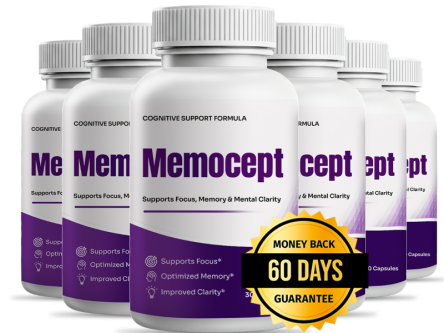
The global market for cognitive health supplements continues to expand as consumers increasingly seek products designed to support memory, focus, and overall brain performance. Among the brands attracting attention in this rapidly growing sector is Memocept, a dietary supplement marketed as a natural solution for individuals looking to enhance cognitive function and maintain mental sharpness as they age.
Investigating Memocept? Tap To Visit Official Website
As awareness of brain health grows worldwide, products promising support for memory retention, concentration, and mental clarity have become a significant segment of the wellness industry. Memocept has emerged as one of several supplements competing in this crowded marketplace, promoting a blend of ingredients intended to support cognitive performance while emphasizing a natural and non-habit-forming approach.
Read our in-depth analysis, ingredient transparency, safety concerns of Memocept
Rising Interest in Brain Health
Experts note that concerns about cognitive decline are becoming increasingly common among adults of all ages. While memory loss has traditionally been associated with aging populations, younger professionals and students are also seeking ways to improve concentration, productivity, and mental endurance.
The demand for brain-support supplements has been fueled by several factors, including longer life expectancy, increased awareness of neurological health, and the pressures of modern work environments. Consumers are looking for products that may help address issues such as mental fatigue, brain fog, reduced focus, and memory challenges.
Memocept has positioned itself within this trend by marketing its formula as a supplement designed to support multiple aspects of cognitive performance, including memory, focus, learning ability, concentration, and reasoning skills.
Industry analysts estimate that the global nootropics and cognitive wellness market will continue growing throughout the decade, driven by consumer interest in preventative health strategies and natural wellness products.
What Is Memocept?
According to product information published by various Memocept websites, the supplement is designed to support brain health through a combination of natural ingredients and nutrients believed to contribute to cognitive function. The product is promoted as a daily supplement aimed at enhancing memory retention, mental clarity, and concentration.
Marketing materials describe Memocept as a brain-support formula that works by supporting neurotransmitter activity, improving circulation to the brain, and providing nutrients associated with cognitive performance. The supplement is also advertised as being manufactured in the United States in facilities that follow Good Manufacturing Practices (GMP).
The company promotes the product as suitable for adults seeking support for memory, focus, and overall mental performance without relying on traditional stimulants.
Ingredients and Formulation
One of the key selling points highlighted by Memocept marketing materials is its use of ingredients commonly associated with cognitive support.
Various product descriptions mention compounds such as Ginkgo Biloba, Bacopa Monnieri, Phosphatidylserine, N-Acetyl L-Carnitine, B-complex vitamins, and other nutrients often found in nootropic supplements. These ingredients have been the subject of numerous scientific studies investigating their potential roles in cognitive health and brain function.
Ginkgo Biloba, for example, has long been studied for its potential effects on blood circulation and cognitive performance. Bacopa Monnieri is frequently included in memory-support supplements due to research suggesting it may play a role in learning and information retention.
Similarly, B vitamins are widely recognized for their importance in nervous system function and energy metabolism. Nutritional deficiencies involving certain B vitamins have been linked to cognitive challenges, making them a common inclusion in brain-health formulations.
However, health experts emphasize that while individual ingredients may have scientific support, results can vary significantly between individuals, and dietary supplements should not be viewed as substitutes for medical treatment.
Consumer Interest and Reported Experiences
Testimonials featured on Memocept promotional websites describe users reporting improvements in focus, mental clarity, memory recall, and overall cognitive confidence after consistent use. Some consumers claim they experienced better concentration during daily activities, while others report feeling more mentally alert and productive.
Several testimonials highlight experiences among older adults concerned about age-related memory issues. Others focus on professionals seeking enhanced concentration during demanding work schedules.
Consumer interest in such products reflects a broader societal emphasis on maintaining cognitive performance throughout life. Many individuals are increasingly proactive about brain health, seeking nutritional strategies, lifestyle changes, and supplements that may support mental wellness.
Nevertheless, healthcare professionals generally recommend evaluating testimonials with caution, noting that individual experiences do not necessarily reflect typical results.
The Competitive Cognitive Supplement Market
Memocept operates in a highly competitive industry that includes hundreds of products marketed for brain health and cognitive enhancement.
The cognitive supplement sector features a wide range of formulations, from herbal blends and vitamin combinations to more advanced nootropic compounds. Companies compete by emphasizing unique ingredient combinations, manufacturing standards, customer reviews, and scientific references.
Market observers note that consumer education remains an important challenge within the industry. With numerous products making similar claims regarding memory, focus, and mental clarity, shoppers often face difficulties determining which supplements may be most appropriate for their needs.
As a result, transparency regarding ingredients, manufacturing practices, and supporting research has become increasingly important to consumers.
Scientific Perspectives
Researchers studying cognitive health continue to investigate how nutrition, lifestyle factors, and supplementation may influence brain performance.
Many experts agree that cognitive health is influenced by multiple factors, including sleep quality, physical activity, stress management, nutrition, social engagement, and genetics. Supplements may play a supporting role within a broader wellness strategy, but they are generally not considered standalone solutions.
Clinical evidence regarding cognitive supplements remains mixed. Some ingredients found in products like Memocept have shown promising results in specific studies, while other research has produced more limited findings.
Scientists emphasize the need for continued research, particularly large-scale clinical trials, to better understand the long-term effectiveness of many cognitive support ingredients.
Consumers are encouraged to review available evidence carefully and consult healthcare professionals before beginning any supplement regimen, especially if they have existing medical conditions or take prescription medications.
Marketing Claims Under Scrutiny
Like many products in the wellness industry, Memocept has faced scrutiny regarding some of its promotional claims.
Independent consumer watchdogs and review websites have raised concerns about certain marketing practices commonly used within the supplement industry, including aggressive advertising, limited-time discount offers, and claims that may not always be supported by strong clinical evidence.
Some critics have questioned promotional campaigns associated with Memocept, arguing that consumers should exercise caution when evaluating advertisements promising dramatic improvements in memory or cognitive performance.
Industry experts note that dietary supplements in the United States are regulated differently from pharmaceutical drugs. Manufacturers are generally responsible for ensuring product safety and truthful labeling, but supplements are not typically required to undergo the same pre-market approval process as prescription medications.
As a result, consumers are encouraged to verify claims independently and seek professional medical advice when evaluating health products.
Regulatory Environment
The broader supplement industry operates within a regulatory framework that balances consumer access with safety oversight.
In the United States, dietary supplements are regulated under the Dietary Supplement Health and Education Act (DSHEA). Manufacturers may make certain structure-function claims regarding how ingredients support normal bodily functions but cannot legally claim to diagnose, treat, cure, or prevent diseases without regulatory approval.
Most supplement websites, including those promoting cognitive health products, include disclaimers stating that claims have not been evaluated by the Food and Drug Administration and that products are not intended to diagnose or treat medical conditions.
Consumer advocates argue that individuals should pay close attention to these disclosures and understand the distinction between dietary supplements and approved medical treatments.
The Role of Lifestyle in Cognitive Wellness
Healthcare professionals consistently emphasize that cognitive health depends on more than supplementation alone.
Research suggests that regular physical exercise, adequate sleep, balanced nutrition, mental stimulation, and social engagement may all contribute to long-term brain health.
Neurologists often recommend evidence-based habits such as:
- Maintaining cardiovascular fitness.
- Managing blood pressure and cholesterol.
- Getting sufficient sleep.
- Engaging in mentally stimulating activities.
- Following balanced dietary patterns.
- Managing stress effectively.
Many experts view supplements as potential additions to these foundational habits rather than replacements for them.
Consumer Decision-Making
For consumers considering cognitive support supplements, experts recommend evaluating several key factors:
Ingredient transparency: Understanding what ingredients are included and their respective dosages.
Scientific evidence: Reviewing available research related to both individual ingredients and finished formulations.
Manufacturing standards: Looking for products produced in facilities following recognized quality standards.
Professional guidance: Consulting healthcare providers before beginning supplementation.
Realistic expectations: Understanding that results may vary and that supplements are not guaranteed solutions.
Such considerations are particularly important in a market where marketing messages can sometimes outpace scientific certainty.
Memocept Ingredients: Scientific Insights
Memocept’s formula combines several natural compounds commonly used in cognitive supplements. Here’s a detailed look at the key ingredients and what research says about them.
1. Ginkgo Biloba
Role in Memocept:
Ginkgo Biloba is included for its potential to improve circulation to the brain and support memory function.
Scientific Evidence:
- Studies suggest that Ginkgo may help improve cognitive performance in individuals with mild cognitive impairment.
- A 2020 meta-analysis in Frontiers in Pharmacology found that Ginkgo extract could positively impact memory and attention in elderly adults.
- However, effects vary; some studies report modest improvements, while others find limited benefits.
Anecdotal User Experiences:
- Many older adults taking Memocept report feeling more alert in the morning.
- Some users notice improved short-term recall, like remembering names or appointments.
- A subset of users mention a slight increase in focus during tasks that require sustained attention, such as reading or working on spreadsheets.
2. Bacopa Monnieri
Role in Memocept:
Bacopa Monnieri is traditionally used in Ayurvedic medicine to enhance learning, memory retention, and mental clarity.
Scientific Evidence:
- Research published in Journal of Ethnopharmacology indicates Bacopa may enhance memory recall and learning ability over periods of 12 weeks or longer.
- Bacopa is believed to support neuron communication and antioxidant activity in the brain.
- Side effects are generally mild, sometimes including digestive discomfort.
Anecdotal User Experiences:
- Students and professionals report that regular use helps them retain information more efficiently during study or work sessions.
- Users often describe feeling “mentally sharper” during demanding cognitive tasks.
- Some people notice improvements in multitasking ability, attributing this to Bacopa’s effects on mental processing speed.
3. Phosphatidylserine
Role in Memocept:
Phosphatidylserine is a phospholipid that plays a critical role in the structure of brain cells and the communication between neurons.
Scientific Evidence:
- Studies suggest that phosphatidylserine supplementation may support cognitive function, particularly in memory and attention.
- A 2010 study in Nutrition reported improved memory performance in older adults taking phosphatidylserine supplements over 12 weeks.
- The compound is considered safe with minimal side effects.
Anecdotal User Experiences:
- Older adults often report improved recall of daily tasks and better focus during conversations.
- Some users describe feeling less mentally fatigued after long periods of concentration.
- There are reports of subtle but noticeable improvements in mood and stress resilience.
4. N-Acetyl L-Carnitine (ALCAR)
Role in Memocept:
ALCAR is included to support energy metabolism in neurons, which may contribute to cognitive clarity and mental endurance.
Scientific Evidence:
- Research suggests ALCAR may improve memory and cognitive performance in aging populations.
- A study in Neurobiology of Aging found that ALCAR supplementation helped preserve mental function in elderly participants with mild cognitive impairment.
- ALCAR may also have neuroprotective effects due to its antioxidant properties.
Anecdotal User Experiences:
- Users report feeling more alert and less “foggy,” particularly during work or study sessions.
- Some users notice quicker recall when performing mentally demanding tasks.
- Effects tend to be more noticeable in combination with other ingredients rather than ALCAR alone.
5. B-Complex Vitamins
Role in Memocept:
B vitamins (including B6, B12, and folate) are critical for nervous system function, energy production, and brain health.
Scientific Evidence:
- Low levels of B vitamins are linked to cognitive decline and memory issues.
- Supplementation can help maintain normal homocysteine levels, which is important for cardiovascular and neurological health.
- Studies in The American Journal of Clinical Nutrition suggest that adequate B vitamin intake may support cognitive performance, particularly in older adults.
Anecdotal User Experiences:
- Users often report subtle improvements in energy and mental clarity.
- Some describe feeling less fatigued during long workdays or study sessions.
- The combination of B vitamins with other Memocept ingredients appears to enhance overall mental performance.
Market Trends in Cognitive Supplements
The cognitive health supplement market has been experiencing significant growth over the past decade. According to industry reports, global revenue for nootropics and brain-support products exceeded $5 billion in 2025 and is projected to reach $10–12 billion by 2030, driven by rising consumer awareness and an aging global population.
Several key trends are shaping this sector:
1. Preventative Wellness Focus
Consumers are increasingly proactive about maintaining cognitive performance before any noticeable decline occurs. This preventative approach has expanded the market beyond older adults to include students, young professionals, and wellness enthusiasts seeking improved focus and mental clarity.
2. Natural and Plant-Based Formulations
A significant driver of consumer interest is the preference for natural, plant-derived ingredients, which are perceived as safer and more holistic than synthetic alternatives. Ingredients like Ginkgo Biloba, Bacopa Monnieri, and Phosphatidylserine resonate with consumers looking for a combination of science-backed efficacy and minimal side effects.
3. Personalized Nutrition and Cognitive Support
Emerging technologies in genetics and metabolomics are enabling more personalized cognitive supplementation, tailoring ingredient combinations to individual neurochemical profiles. Companies like Memocept are beginning to explore formulations that may fit different lifestyle needs, from high-focus workdays to long-term cognitive maintenance.
4. E-Commerce and Direct-to-Consumer Growth
Online sales channels have allowed supplement companies to reach global audiences quickly, often using targeted marketing campaigns and subscription models. Memocept’s online presence, including its websites and social media campaigns, exemplifies this trend, leveraging direct-to-consumer strategies to provide convenient access and repeat purchasing options.
